What to fill a punching bag with (and how to fill one)
In short
Fill a punching bag with shredded fabric or textile scraps, packed tight in layers: it gives an even, cushioned feel, and it is what we fill our own heavy bags with. Add sand only in sealed bags in the middle, wrapped in fabric, and never loose. Fill to the weight the bag is sold as, then top it up after a week of training.

The best thing to fill a punching bag with is shredded fabric: cut-up textile scraps packed tight in layers. It's what we fill our own heavy bags with, because it gives an even, cushioned feel from top to bottom. If you need more weight, sand can go in the middle in sealed bags, wrapped in fabric, but never loose. Here is how the fillers compare, how to fill an unfilled bag step by step, how much you need, and how to fix a bag that's too hard or too soft.

What's inside our filled bags
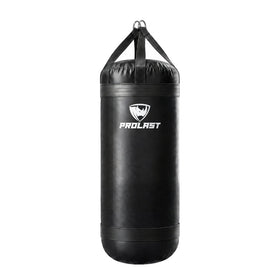
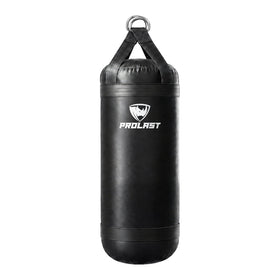
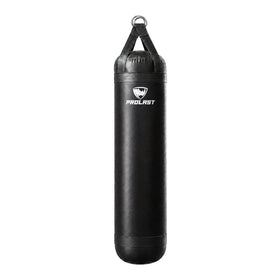
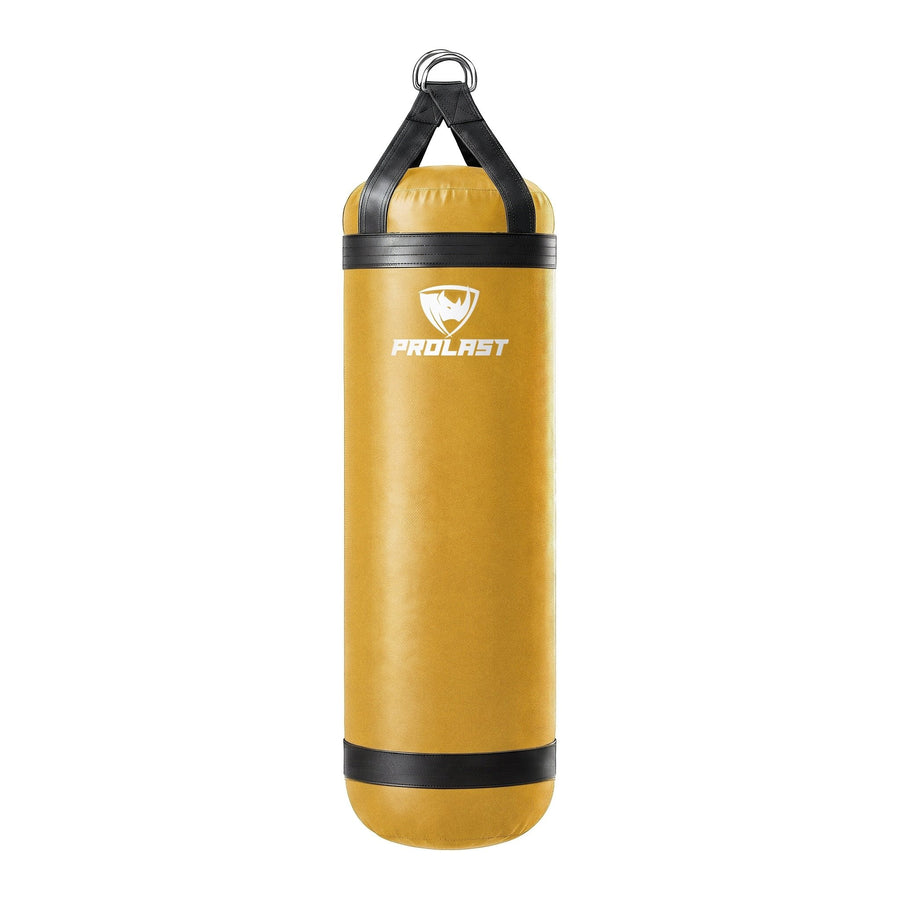
Every filled PROLAST stock heavy bag is packed with shredded cotton fabric and arrives at the weight in its name. If you want a softer bag, you can take some of the fill out. Unfilled bags arrive as an empty shell for you to fill yourself. Our small double end bag and Head Hunter slip bag are filled with shredded cotton fabric too, while our freestanding bags have a high-impact foam interior, with no sand or water to add.
Punching bag filler compared
As a general guide:
| Filler | How it feels | Notes |
|---|---|---|
| Shredded fabric or textile scraps | Even and cushioned | The usual heavy bag filler, and ours. It settles over time, so plan to top it up. |
| Old clothes and rags, cut up | Similar to shredded fabric, if cut small | Free if you have them. Cut them into small pieces and take out zippers, buttons and anything hard. |
| Sand, in sealed bags | Heavy and hard | Adds a lot of weight in a small space. Double-bag it, keep it in the middle and surround it with fabric. Never pour it in loose. |
| Sawdust or wood shavings | Gets hard as it packs down | Dusty, and it compacts into a hard core. Not a good choice. |
| Rice, beans or grain | Hard | Can take on moisture and attract pests. Leave them out. |
| Water | Depends on the bag | Only in a bag made to hold water. Never in a fabric-filled bag. |
How to fill an unfilled heavy bag
- Gather enough filler to reach the bag's weight, and keep a bathroom scale handy to weigh as you go.
- Stand the empty shell upright on the floor with the top open, or hang it so it holds its shape.
- Start at the bottom. Push in a few handfuls of fabric at a time and pack each layer down hard with your fist or the end of a broom handle before adding the next. Loose layers are what make a bag sag later.
- Add sand only in the middle, if you use it. Seal it in heavy plastic bags, double-bagged, and set them in the middle of the bag with fabric all around them, so nothing hard sits against the shell.
- Keep packing to the top, pressing out air pockets around the edges as you go, then close the bag.
- Hang it and train on it for a week, then open it and top it up: the fill settles as you hit it.
How much filler do you need?
Fill an unfilled bag to the weight it's sold as. Our filled bags arrive at these weights:
| Bag | Size | Filled weight |
|---|---|---|
| 4 ft | 48 in tall, 14 in across | 80 lb |
| 4 ft XL | 48 in tall, 18 in across | 135 lb, or 150 lb in the four-panel XL |
| 5 ft | 60 in tall, 14 in across | 100 lb |
| 5 ft XL | 60 in tall, 18 in across | 200 lb |
| 6 ft | 72 in tall, 14 in across | 150 lb |
| 6 ft XL | 72 in tall, 20 in across | 300 lb |
Our leather heavy bags weigh 55 lb (3 ft), 70 lb (4 ft), 92 lb (5 ft) and 110 lb (6 ft) filled. For help picking a size, see what size heavy bag to buy.

Filled or unfilled: which to buy?
Every PROLAST stock size comes either way, and so do our leather bags. A filled bag arrives ready to hang, packed evenly to the weight in its name. An unfilled shell lets you choose the filler and the weight yourself, if you have the material and the time to pack it properly.
Too hard, too soft or hard at the bottom?
- Hard at the bottom: fill settles over time and packs down at the base. Take the bag down, lay it on its side and roll and knead it to loosen the fill, then hang it again; work the lower part of the bag in your next sessions, and top it up from the top.
- Too hard all over: take some fill out. On our filled bags, that's how you soften them.
- Too soft or saggy: add more fabric and pack it down firmly, layer by layer.
- Lumpy: open the bag and break up any clumps, or replace large pieces with smaller scraps.
Example bags
- 4 ft 80 lb heavy bag, filled or unfilled
- 5 ft 100 lb heavy bag, filled or unfilled
- 6 ft 150 lb heavy bag, filled or unfilled
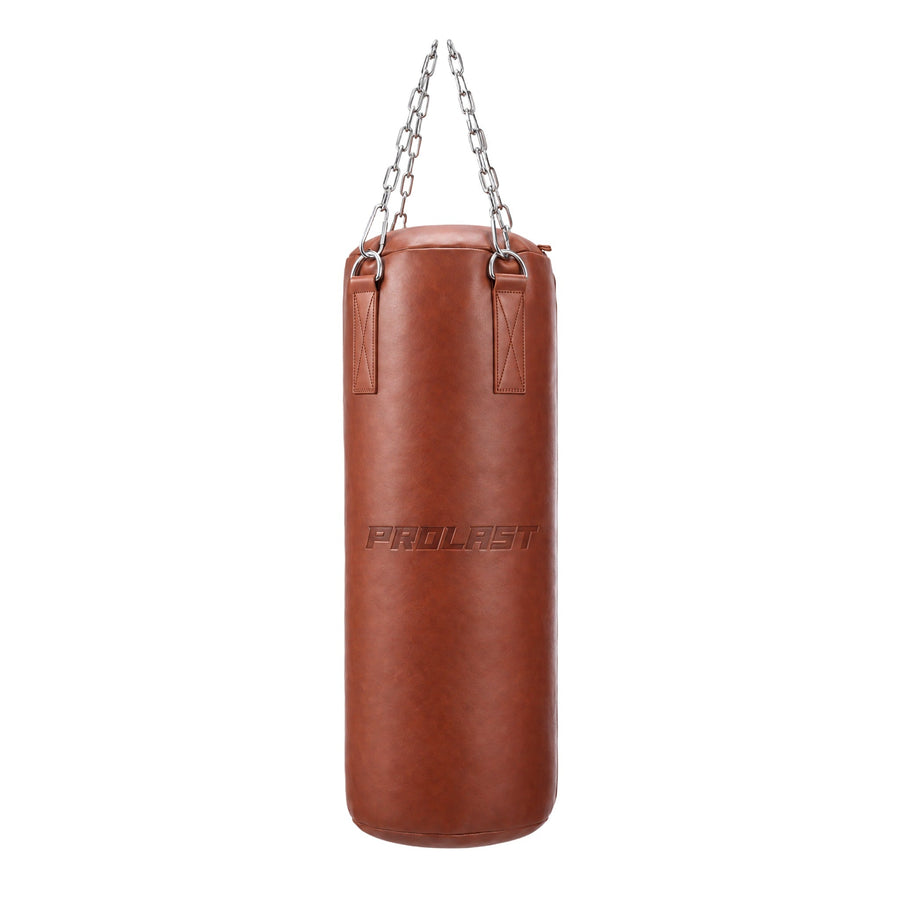
- Retro leather heavy bag, brown, filled or unfilled
Once it's full, our guide on how to hang a heavy bag covers mounts, stands and hardware.
Frequently asked questions
What do you fill a punching bag with?
Shredded fabric or textile scraps, packed tight in layers. It's the most common heavy bag filler and what we use in our filled bags. Sand can add weight, but only in sealed bags in the middle.
What is the best punching bag filler?
Shredded fabric gives the most even, cushioned feel. Cut-up old clothes work the same way if you cut them small and remove anything hard.
Can you fill a punching bag with sand?
Only as part of the fill, and only sealed in bags in the middle, surrounded by fabric. Loose sand settles to the bottom, gets very hard and can work through the seams.
Is it better to fill a punching bag with water or sand?
Neither on its own. Water belongs only in a bag made to hold it, and sand is too hard to use alone. For a standard heavy bag, fabric is the main filler.
What is the cheapest way to fill a punching bag?
Old clothes, towels and fabric scraps you already have, cut into small pieces and packed tight.
How much filler does a heavy bag need?
Enough to bring it to the weight it's sold as: 80 lb for our 4 ft bag up to 300 lb for our 6 ft XL. Weigh as you fill, and top up after a week of training.
What are PROLAST heavy bags filled with?
Shredded cotton fabric. Filled bags arrive at the weight in their name, and you can take some out to soften the bag.
Why is my heavy bag hard at the bottom?
The fill settles and packs down at the base over time. Take the bag down, roll and knead it to loosen the fill, hang it again and top it up.
Products in this guide


Heavy bags, stands and mounts
More guides
All guides from Guides Heavy bags · October 14, 2026
Teardrop, angle or wrecking ball: which heavy bag shape?
We make three shaped heavy bags: the angle uppercut bag (36 in tall, built around uppercuts), the teardrop (44 in, for hooks, uppercuts, clinch work and...
3 min read Heavy bags · October 14, 2026
What size and weight heavy bag should you buy? 4, 5 or 6 ft, 80 to 300 lb
Our heavy bags weigh 80 lb to 300 lb filled: 4 ft bags 80, 135 or 150 lb, 5 ft bags 100 or 200 lb, 6...
6 min read Heavy bags · October 13, 2026
How to hang a heavy bag: ceiling, wall or stand
Hang a heavy bag from a wood ceiling joist with a ceiling mount (holds 250 lb), from wood studs or a filled masonry wall with a...
5 min read